

Pitras are our departed ancestors, and their role in our lives is deeply rooted in tradition and spiritual belief. According to ancient scriptures, honoring them through specific rituals and customs is essential to receive their blessings and maintain harmony within the family.
When a soul leaves the body after completing a full and meaningful life-and the family continues to engage in righteous, pious deeds-that satisfied soul can bestow immense blessings: prosperity, peace, and happiness. However, if a soul departs with unresolved emotions, unfulfilled duties, improper last rites, or if they were disrespected or neglected in life, their lingering presence can manifest as challenges in the family. This may lead to delays in important milestones, draining of resources, or even a block on rewards that are due. Such disturbances are referred to as Pitra Dosh.
Over the years, I’ve observed fascinating patterns: businesspeople and professionals have experienced significant growth or success shortly after the passing of a respected and loved elder. Promotions, financial gains, and progress often follow the peaceful departure of a content soul. On the other hand, families sometimes spiral into crisis after the passing of a loved one who was not treated with care. Such a crisis is often a result of a spiritual imbalance caused by ancestral unrest and is called Pitra Dosh.
Astrologically, while there is no clear-cut method to identify Pitra Dosh, it is commonly associated with the 9th house (representing ancestors) and the shadow planets Rahu and Ketu. Specific planetary positions might suggest its presence, but a deeper investigation is always recommended. Importantly, Pitra Dosh can also originate from external sources-especially through dealings involving ancestral land or property.
Preventing and Removing Pitra Dosh
Fortunately, this dosh is reversible. To prevent Pitra Dosh, it is vital to conduct the final rites of the departed with proper Vedic rituals at sacred pilgrimage sites.
To remove an existing dosh, scriptures recommend performing the Narayan Nagbali ritual along with Tripindi Shradh Vidhaan. These powerful ceremonies can be carried out at several holy locations. Additionally, sponsoring or listening to a 7-day recital of the Srimad Bhagavat Katha, according to one’s faith and capacity, is considered highly beneficial.
The Sacred Window of Pitru Paksha (Sept 7 – Sept 21, 2025)
Regardless of one’s situation, Pitru Paksha-falling between September 7 and 21 this year-is a spiritually significant period for everyone. As per scriptures, Lord Vishnu has designated this sacred fortnight (the second half of Bhadrapada) as a time when Pitras descend to visit their families and bless them. Any good deeds, donations, or offerings made during this time are directly credited to our ancestors. They are uplifted when their descendants engage in righteous acts and saddened when families are caught in conflict or negativity.
How to Honor Your Ancestors During Pitru Paksha
Here are some meaningful and accessible ways to pay homage during this powerful time:
- Perform Tarpan – Offer water to the departed in a ritual known as Tarpan, believed to quench the spiritual thirst of Pitras caused by karmic attachments. This ritual can be done with the help of qualified Teertha Purohits at sacred sites like Varanasi, Haridwar, Gaya, Ujjain, or Badrinath (Brahma Kapal).
- Maintain Harmony at Home – Avoid arguments, especially with elders. Treat all family members with love and respect. Pitras are pleased by harmony and are distressed by discord within their lineage.
- Donate to a Noble Cause – Offer food, clothing, or utensils to Brahmins or donate to charities like old-age homes, orphanages, blind schools, or temples. Volunteering your time is equally valuable.
- Feed Birds and Animals – Feed crows, ravens, and cows. These creatures are believed to carry the essence of ancestral spirits and offerings made to them reach your Pitras.
A Simple Daily Ritual for Pitru Paksha
Here’s an easy ritual anyone can do from home:
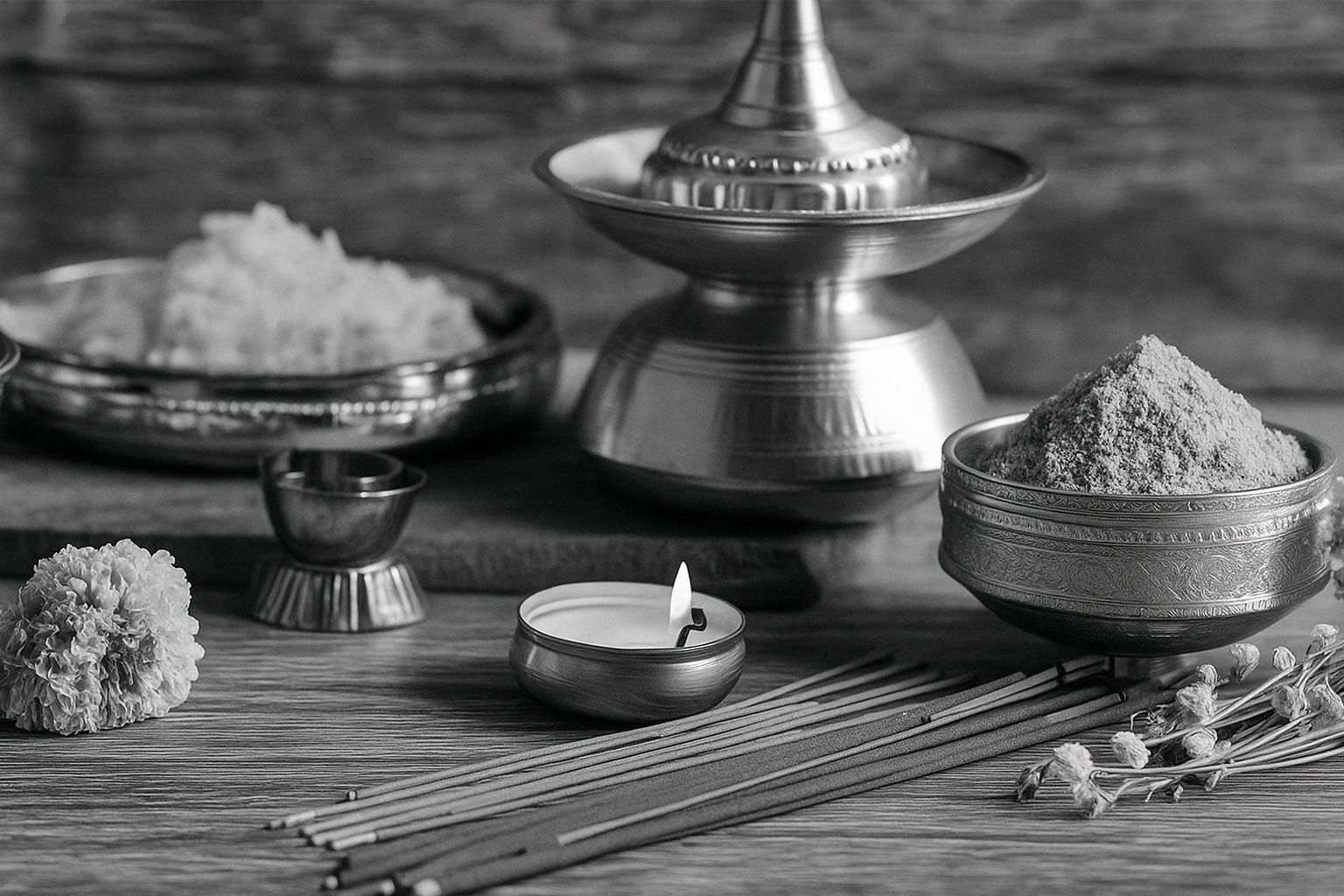
- Each morning after sunrise, sprinkle some wheat flour (aata) on a clean metal plate and place it just inside your main entrance door.
- Light a ghee diya (or a natural beeswax candle) and place it on the flour.
- Keep the door open for a short while, inviting ancestral energies.
- In your kitchen or place of worship, place some fruits or sweets in an open container for your ancestors.
- After sunset, light another ghee diya and place it next to your drinking water container in the kitchen. If there isn’t a designated container, use a clean, preferably unused glass filled with water. Ensure the kitchen is clean-no dirty utensils or leftover food should be lying around.
- The next morning, you may offer the water to a tree or a plant.
In Conclusion
Pitru Paksha is not just about rituals-it’s a time of deep connection, reflection, and gratitude. It’s a reminder that our lives are rooted in the sacrifices and blessings of those who came before us. By observing these practices with sincerity and devotion, we open the door to their grace and guidance. Let this Pitru Paksha be a time of renewal, reverence, and blessings for you and your loved ones.